Friday, February 23, 2007


My daughter the transformer

I became a father for the third time 20 years ago this month. I began dating a very nice woman with a daughter who was a junior in high school. Now, not everything lasts forever, but by the time we said goodbye, the daughter was in grad school and had become my oldest child.

The first thing her mother said in that bittersweet conversation was, "I don't want this to affect your relationship with Paige." And it didn't. She was, by then, well on her way to becoming an Episcopal priest, and, since then, has married my youngest and his wife (see above) and baptized two of my (now) four granddaughters. And, as it happens, she's now my geographically-closest kin, being about two hours away in York Harbor, ME.

When she isn't marrying folks or dunking babies, Paige is busy transforming the world, and has come up with something called the U2charist, a eucharist service that uses the music of U2 to help spread the gospel of mercy and charity, and, specifically, the Millennium Development Goals of eradicating poverty. As you'll see (and hear) here, the movement has spread throughout this country and has extended to England, New Zealand and Hong Kong as well.

I'm not a churchgoing type, and I'm not a big U2 fan, either. But I'm a huge fan of getting to watch a person reach out and transform the world -- especially when it's somebody I'd love anyway.

Here's to 20 more years of voluntary kinship.

Saturday, February 17, 2007


It seemed like such a good idea at the time

I came across this ad in an issue of the Press-Republican of Plattsburgh NY published just after WWII. They had come up with some terrific inventions during those years and were trying to figure out how to use them in civilian life.

This one doesn't appear to have caught on.

(click on image for larger version)

Sunday, February 11, 2007


My first Maine moose!

(not visible in picture)


You have to understand what went into this picture -- coming around the curve by the high school, about 2 miles from the house and there's the moose, standing by the side of the road. I slowed down, took the camera from my pocket, switched it on, rolled down the window and was able to get off one snapshot without aiming before he was completely gone into the woods.

Considering he turned and started galumphing off at a pretty good clip as soon as I began slowing down, a hoof or two is plenty of evidence. Next time, maybe I'll get one of the kind that pauses to strike a pose.

Saturday, February 10, 2007


Homecoming

Friday night I went up north to cover an informational meeting about the various plans to reform Maine's educational system. The main one is from the governor, who has written the purported savings into his proposed budget, making it problematic. For the rural folks out here in one of the last schools before you get to Quebec, the prospect of being pulled into a consolidated district is upsetting, and not at all because of cost. One woman noted that she knows a kid whose father is a border guard and he's already spending two hours on the bus EACH WAY -- sending him, and these other remote kids, to a school nearly another hour away seems cruel and counterproductive.

People mentioned cost, but only because the governor's proposal allows them to keep their teacher/student ratios intact, if they want to pay the full cost of the additional teachers, and would guarantee that no schools would close -- if they wanted to pay the cost of running a school in addition to the taxes they'd be paying to the consolidated district.

But their chief concern is distance and quality of education. They can't see putting their kids on buses for another hour each way in order to go from grade level sizes of 75 to grade level sizes of a couple of hundred -- especially since their little district was rated sixth best in Maine a few years ago. "It's like trading a Cadillac for a Yugo," said a truck driver in the audience.

And he was fairly typical of the people there -- articulate, passionate blue-collar country people. I looked around and I felt like I was back in Star Lake. As you can see in this picture, there were plenty of people in the audience much too old to have kids in school. But they have grandchildren or great-grandchildren or neighbor kids in the school and a sense that these are THEIR kids we're talking about. This is the kind of place where people go to the Senior Play even if they don't have a kid in it. As it happened, there was a middle school basketball tournament going on in the gym at the same time, the parking lots were full and cars were parked down the road for quite a way.

The four guys facing the crowd were the speakers. There are no neckties in this part of the country, as far as I can tell. (Actually, that's an exaggeration. The town manager in Farmington wears one, as does the local Edward Jones guy.) At the rostrum is the school superintendent. The guy in the red shirt is our State Senator, Walt, who I was meeting in person for the first time but have talked to on the phone. I think he's a retired teacher. The guy in the flannel shirt and vest is one of our reps, Tom, who is an environmental engineer for International Paper. The guy in the maroon sweater is also a state rep, from the far northwest, and a retired dairy farmer.

They each got up and spoke for a little while, but certainly less than 10 minutes each. Then it was a back and forth with the people in the room, very casual, only one "speech" and that from a genial old guy who everyone seemed to expect it from and who was pretty interesting anyway. The meeting lasted for about an hour and a half and then, of course, we all stood around and talked to each other for another half hour or so.

I got home a little after 10. It was nine degrees above zero and every star in the universe was visible overhead -- it was hard to pick out the constellations, you could see so many other stars.

Saturday, February 03, 2007


Sarnoff says public will not pay for radio programs
(December 28, 1923)


With the general trend of thought among radio enthusiasts leaning towards the question, "Who will pay for broadcasting?" the remarks of David Sarnoff, vice-president and general manager of the Radio Corporation of America, in a recent address are especially timely:

"It has been said by a great many people and a great many corporations, some very large and able," said Sarnoff, "that broadcasting depends upon a solution of the problem whereby the consumer will pay for the entertainment which he receives. In other words, it has been said that unless some method is provided whereby a means is created for collecting revenue from the user of a broadcast instrument, that the whole industry is founded on sand and that it is bound to collapse in time because there will be no means of supporting it."

"It is my firm conviction," continued Mr. Sarnoff, "that that sort of solution to the problem is not necessary, that broadcasting can be made commercially practicable without any means being found for collecting from the consumer, that the greatest advantage of broadcasting lies in its universality, free entertainment, culture, instruction and all the items which constitute a program, in doing that which no other agency has yet been able to do. It is up to us, with intelligence and technique and broadness of spirit and vision as to the future, to preserve that most delightful element in the whole situation -- the freedom of radio."

"Just so soon as we destroy that freedom and universality of radio and confine it to only those who pay for it -- those who pay for the service, in other words -- just so soon as we make of broadcasting 'narrowcasting,' we destroy the fundamental of the whole situation. And, therefore, I believe very definitely that broadcasting as constituted today is commercially sound, and that it will remain so in the future, although there may be selective methods and narrowcast methods which will do no harm. These may supplement the situation. There may be wired-wireless and the like. All of these will make their contributions. But fundamentally there will remain, and there must remain and be preserved, that element of the broadcast situation which makes it possible for grand opera to go to the slums and to the districts of the poor as well as the rich, everywhere in the world, without any charge. The real picture of a $15 or a $25 set in the home of the slums, if you please, receiving the magnificent things in the air, is the picture we must preserve."

(I'm not sure the date of the cartoon but it was roughly contemporaneous to this article.)

Saturday, January 27, 2007


Howard's new hero

KUALA LUMPUR, Jan 26 (Reuters Life!) - Guard dogs protecting a fruit orchard in Malaysia have met their match -- a 7.1-metre-long (23-ft-long) python that swallowed at least 11 hounds before it was finally discovered by villagers.

"I was shocked to see such a huge python," orchard-keeper Ali Yusof told the New Straits Times in an article published beneath a picture of the captured snake, which was almost long enough to span the width of a tennis court and as thick as a tree trunk.

Villagers did not harm the snake, which was tied to a tree then handed to wildlife officials, the paper said on Friday.

Friday, January 26, 2007


Words, but perhaps not "words, words, words"

Catching up on friends' blogs, now that I'm back on-line, I came across this entry on writing from my friend Brian Fies, creator of "Mom's Cancer."

Parts of it are excellent, as the young curate said. I'm very much a foe of the "story about the story" gambit, as well as stories about ordinary people with funny names or with the same names as famous people, and the "who's working during the holiday story," which I have had to do because, well, when you're working on Christmas and have to crank out a story, what else is there?

(Other than coverage one year of the fellow who attempted to burn the giftwrap but needed to keep it out of the wind so piled it up against the house, which had vinyl siding. And I managed to avoid saying that "he had apparently had too much Christmas cheer.")

But the search for cliches can become a witch hunt -- and that's a good example. The term "witch hunt" is often used because, however the actual history parses out, we all know what it means: a search for evil that turns up people who aren't guilty of it but who fit some pattern that the overzealous searcher, falsely, believes constitutes proof.

There's nothing wrong with saying that something "is threatening to become a witch hunt" as long as you confine it to things that are threatening to become witch hunts. If you only used "wind-whipped flames" for fires in which the wind is genuinely working to spread the fire, and backed that up with a quote from firefighters that, dammit, we'd have knocked this thing down easily if it weren't for that strong, persistent wind, I'd be okay with the phrase. But the wind blows more often than not and is often a factor, so save it for times when that factor rises to the point of significance.

Homeric poetry relies on certain stock phrases -- the wine-dark sea and rosy-fingered dawn being a familiar pair -- as well as a naming convention in which Hector is "tamer of horses" and Diomedes is "of the loud war-cry."

These epithets had certain purposes, both in preserving meter and in providing mnemonics for the singer, but they worked because they also produced an effect upon the listener that transmitted information without distracting from the subject at hand. If, to return to those wind-whipped flames, you came up with a long, unique description of how the ... um ... moving air was exacerbating the situation, fire-wise ... it would become a whole new subject on its own. If the wind is a factor but you'd rather use your 15-inches of copy to discuss the evidence of arson and the loss of a family business, the quick, familiar phrase allows you to make the point and move on.

Again, the problem is not in the words but in the writer. If, as ronniecat notes in the comments section of Brian's blog entry, buses always plunge, that's just lazy prose. I'd say a bus would have to fall at least three times its length and with a fair amount of free-fall involved, or at least significant speed, to truly "plunge." If it just went off the road and tumbled down a hillside, then that's what happened and "plunge" is simply the writer being overly dramatic and grabbing for a cheap effect with formulaic words.

An editor with time will ask "did it actually plunge?" But now that I are one, I realize how rarely editors have time to cross-examine their writers. You change it or you let it stand and you move on. That's not ideal, but it's how it happens. This editing thing is like parenting -- you find yourself doing things and saying things you swore you would never do or say.

I do think that it's worth devoting some thought to whether or not the bus actually plunged and to what extent the wind was whipping the flames, but I'm more concerned with someone having "too much Christmas cheer" on a night when we're getting "the white stuff" -- that is, the true cliches which masquerade as attempts to be clever. Which brings us back to the supposed cleverness of the story-about-the-story or the "I don't have an idea for my column" column.

They aren't clever or inventive and they belong on the editor's spike, if there were still an actual spike upon which stories that aren't going to see print were impaled. But spiking a story isn't a cliche -- it's terminology or, for those who hate terminology, jargon.*

(About 15 years ago, copy editors declared war on "in lieu of bail" as jargon. This is nonsense, but the idea spread and you'll rarely see it in print anymore. People go to jail rather than paying bail, but never in lieu of it. This kind of decision is what keeps low-level management types feeling important.)

For my part, I want writers to make sense, to be well-organized and to avoid lazy, sensational prose. I'd like them to think about what a story is -- the two questions being "So what?" and "Who cares?" Why am I writing the story, who is going to be reading it and why should they bother?

If they do that, they won't use a lot of cliches, though they may use some familiar and useful expressions. And their stories will read like Homer.

Well, maybe. Hey, an editor's reach should exceed his grasp.


* Poorly written stories never end up on "the proverbial spike" because, as far as I know, there is no proverb about spikes. At least, not this kind. But that's a rant for another day.

Thursday, January 25, 2007


My Dinner with Howard


Howard made the move to Maine in a small plastic tub in the cab of the U-Haul. It was pretty frigid out and I didn't want him to end up hibernating or worse. Now, Destry rode in a kennel back in the van, which was on a flatbed behind the truck. He didn't much like the experience, though he was okay after 24 hours of wandering around feeling insecure.

But somehow Howard thrived on the change. Maybe it shocked him into some kind of growth spurt, but since arriving in Maine, he has become Mr. Curious, not just popping out of his cave -- a cut-off plastic cassette tape caddy -- but stretching his neck up and even putting a front paw on a rock to rise up a little whenever he sees motion in the area.

It's tempting to mistake this for sociability, but the other day, a piece of food drifted where he couldn't see it and I reached in to poke it back towards him. When my finger got within about eight inches of him, he struck -- of course, he didn't come close, since his neck is only about an inch and a half long. But it sure served notice that Howard, bless his heart, operates entirely on prehistoric instinct.

When he gets to hockey-puck size, I'm going to have to really start handling him like an armed mousetrap. Meanwhile, he's a pretty funny little guy. Here's what happens when you drop a small chunk of meat into his tank.

As you'll see, he's not much for dinnertable conversation.

Friday, January 19, 2007


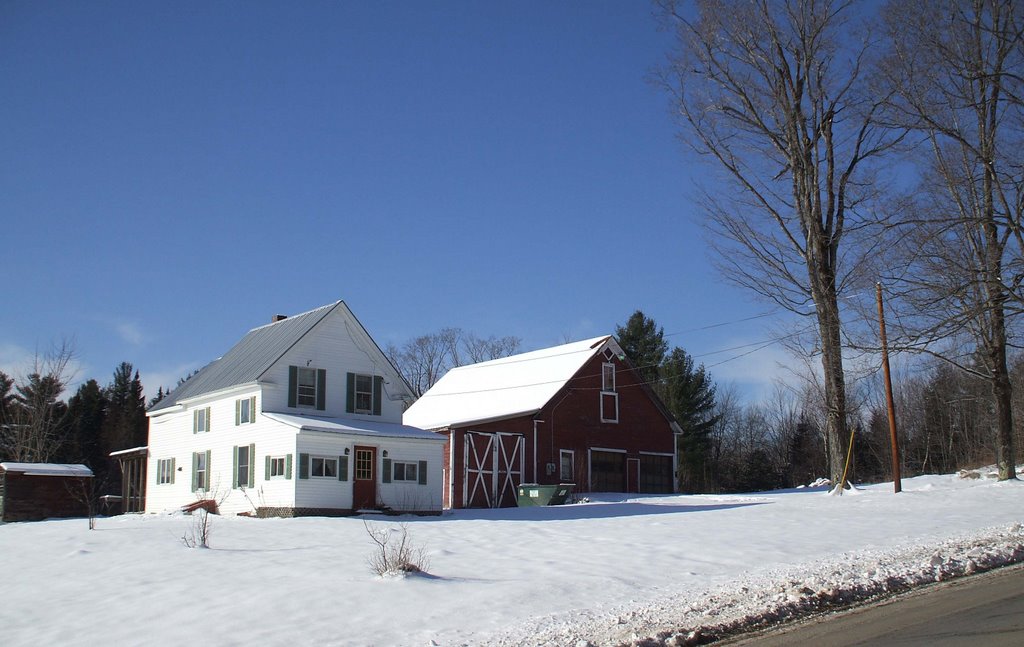
This picturesque little snow-covered homestead is, in fact, my new home. The weather at the start of the week was horrifically cold, but the natives acknowledged as much, so I'm not too shocked, and that is how you get such beautiful blue skies. And it was wonderful today -- cold and crisp but not bone-chilling.

The house is about 4 miles from the office and quiet, though cars sometimes pass by. If the road weren't at all busy, I'd have to worry about being snowed in, but it has just enough traffic to be a priority and it gets cleared quickly and well. I've got a neighbor across the road, though you have to look sharply to see his house, even with no leaves on the trees, and another in back, but at quite a distance. I don't know they're around unless I want to.

The house has three bedrooms upstairs, and a large livingroom, generous kitchen and closet of a bathroom downstairs. My friend Terry, who I discovered quite by serendipity was living here, figures it's a century or more old. I'm quite sure he's right.

Terry is someone I've known for nearly 40 years. We met in the 1968-69 academic year, when I was a sophomore and he was working construction and playing music in the various coffeehouses on and off-campus. We even lived together briefly in the fall of 1970, but then I dropped out of school and moved to Colorado.

I ran into him again when I was moving back east in 1987 -- I stopped off at my old college as we drove through Indiana and ran into Terry, who happened to be visiting from Maine. It was quite a surprise reunion. We then saw each other on purpose in 1989 twice, again at a musicians' reunion in Indiana in 1994 and at a second reunion concert there in 2005. At that last meeting, he told me he was living in some little town in Maine -- a different town than in the 80s -- but it didn't mean anything to me at the time.

When I got this job, they sent me a few copies of the paper so I could get a handle on it, and I saw a letter to the editor Terry had written. Turns out he lives about 10 miles from here. This meant I had someone to run me around and help me find a place to live, and also to help unpack the truck. (A task shared by me, Terry, my son Gabe and my new boss, David.)

The job is good. In fact, it's a lot of fun and the people at the paper are all good folks who like working with each other. The work is more time-critical than at my last job, in the sense that, while there isn't more of it, there are people specifically waiting for various tasks to be completed, so I can't necessarily put off one thing while I work on something else, which I could back when I was a one-man band and the final deadline was all that mattered.

The trade-off is that I'm not working without a net anymore -- there are people to help troubleshoot the work as it's being done, and to pick up some of the pieces when I'm starting to flail. I like that.

I'm still living out of boxes, and without TV or Internet at home -- posting this from the office -- but I'm busy enough that it isn't too big a deal. I plan to do some unpacking this weekend, explore the area a little and then go over to Terry's to watch some football on Sunday.

Life is good here on the farm.

Saturday, January 06, 2007


Some Immigrants Just Never Stop Immigrating

Here's a column I wrote at my old job seven years ago, but which seems applicable today. The picture is of my son, Gabe, and my dog, Mr. O'Malley, on a bluff overlooking the Mississippi on yet another move from Colorado to New York, in 1987.

The way I heard the story, my great-grandfather Pedersen was sailing into Copenhagen when he realized he'd made a mistake. Others in the family say he already knew he was only coming back to say good-bye.

In any case, he and his brothers had gone to America with a plan to earn money and buy farms back in Denmark. They worked around the country at about anything they could put their hands to and, somewhere along the line, he gave up the part about coming home again.

He wound up on the Upper Peninsula of Michigan, among a lot of other Scandinavians and some Cornishmen, too, who had come to the iron mines to make new lives for themselves. He never got rich, but he lived long enough to see his son head off to Wisconsin for college and then, later, move to Pennsylvania as manager of an iron mine there.

I'm sure it never occurred to him to tell his son not to move away. After all, it was how he had found his own place in the world. That seems to be what we built in this country: A family tradition in which you define yourself by who you are, not where you are.

My mother's family tree is full of people who were born with itchy feet, and who passed them on to their children. Great-great-great grandfather Leander Phoenix came from Quebec to Saratoga Springs, married a Broadalbin girl and then took her away to the midwest, where they produced a son, Josiah, who, as an adult, used to take long walks every Sunday, visiting a different church, sampling a different religion, each week. Just to see what it was like.

Another great-great-great grandfather on that side of the family came from Cork via London, then worked a farm in northern Indiana, where he helped the local priest build the first building of what would, 125 years later,
be my university. He moved on to
Clinton, Iowa, and later out to Boone. Family tradition says he finally found a place to stay, not because it was perfect, but because that was where the horses died.

In short, we arrived as immigrants and never stopped moving. Some brothers and sisters along the way stuck a peg in and stayed put, but those in my direct line, my parents, grandparents and various degrees of greats, never did. Except for a few transitional periods, I don't think we ever had two adult generations living in the same place on this side of the Atlantic, and my own siblings are now in Colorado, Florida, New York, West Virginia and suburban DC, none closer than 300 miles to another.

It is, however, a willingness, rather than an eagerness, to move. That is a distinction often lost on those with an instinct to stay put.

When my father was about the age I am now, he'd already moved once, from Pennsylvania to New York, where he had built a solid career in the mining business and raised a family in an idyllic little town where people cared for each other.

But the company had become enmeshed in what was then a brand-new phenomenon, the leveraged buyout, and the new owners had started cannibalizing it to maximize profits and pay off the cost of acquisition. Decisions made, not by steel people in Pittsburgh, but by money people on Wall Street, were about to kill the mines, and the town that relied upon them. My father did not fancy presiding over this cold-blooded, miserable process.

For all the arrogance of a 20-year-old, I knew when to listen with respect, as we walked around the lake one spring day and my father poured out his frustrations and unhappiness. But when, a few months later, my little brother, his youngest son, was killed in an accident at 17, I challenged him.

"Tony never got a chance to do the things he really wanted to do with his life," I said to him. "When are you going to do the things you really want to do?"

A few months later, he called to tell me he'd found a job that combined his experience on the school board with his years of industrial management, as labor negotiator for the Kenmore School District. The change from life in
Star Lake to life in Buffalo was wrenching, but the price of staying in one place had been exacting a far greater toll.

It was time to move on, and so he moved on, and it was a good move. He finished out the last 10 years of his career doing something he wanted to do, something he truly enjoyed, something he could feel good about doing.

For all the wonderful, generous things my father did for us, I was never so proud of him as I was when he accepted the legacy of a family that has never let a well-established life and the fear and inconvenience of change
keep them from living the lives they must live.

Now my own adult children, speaking from their homes in New York, in Massachusetts and in Connecticut, have accepted the role I took before them, that of nagging their father into exchanging comfort for disruption,
into overturning his life for the better, into doing what he truly needs to be doing.

So this will be my last column for the Press-Republican, as I end 12 happy years in Plattsburgh, and set out for the next place.

Thanks for everything. Maybe we'll run into each other again, somewhere down the road.

Copyright 1999, Press-Republican, Plattsburgh NY

Saturday, December 30, 2006

Getting Better Dreams

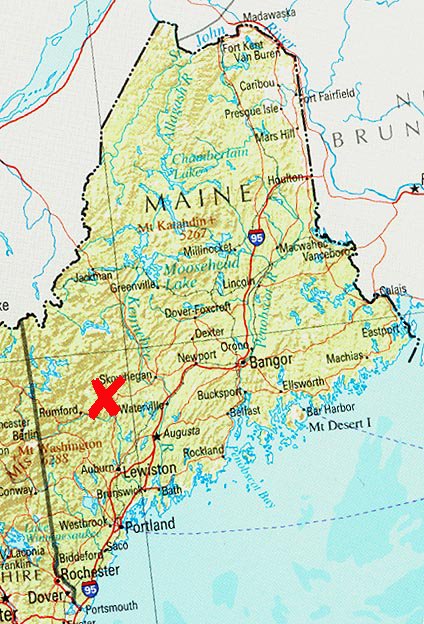
Here's a map of Maine, with a big red X over the town of Farmington.

Starting Tuesday, January 16, the Franklin Journal, which has been published in Farmington for a little over 200 years, will have a new editor, and I will have a new job. You'll note that I didn't furnish a link for the Franklin Journal, because it isn't on line. It also isn't owned by a rapacious Wall Street firm that wants only to drag as much money out of the community as possible and is willing to publish a newspaper if necessary. Rather, it's owned by this guy Bill who lives in North Carolina and is happy to have a couple of papers in Maine that make him some money.

The paper comes out on Tuesday and Friday. It's very small -- the Tuesday paper is eight pages and the Friday is 16. It doesn't have room for stories about the war, but even papers that have room for stories about the war would rather run stories about Brittany Spears, so it really doesn't matter much. I'd rather not have the space, and run neither, than have the space and be forced to make the wrong choice.

As it is, the paper runs the news of the local community, news they can't get anywhere else and that they care about. This is back to the days of the entrepenurial small town paper that matters to the people it writes about. This is going to be a blast.

If you check the link above, you'll find that Farmington is a combination of true rural living with some nice collegiate influence -- there are some book stores and funky clothing stores and plenty of other fun places without it being a "college town" to the extent that the locals are overwhelmed. There's a good hospital, lots of places to walk dogs and enough stores that you really don't have to drive the 40 miles down to Auburn unless you want to.

Of course, my email won't change, so in this on-line world of ours, it won't really matter too much that I've changed my physical base of operations. Except that I may change my tone as my daily three-dimensional life goes through changes. And I expect those changes to be for the better.

As for the headline above, I was cleaning out boxes when I came across some quotes I had collected, including one from Bill Walton, who said, "If your dreams aren't coming true, maybe it's time to get yourself some new dreams."

I've just got my same old dreams, but I'm remembering the importance of keeping them from shriveling or worse.

Sunday, December 24, 2006


For the record ....

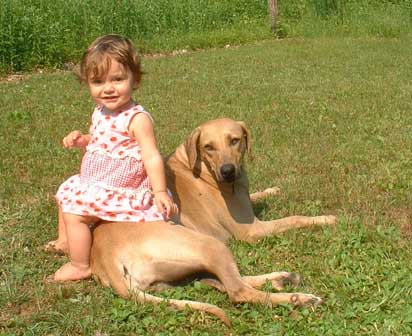
Destry would like to point out that, when it comes to very young granddaughters, Nellie was not the only ridgeback in the family with a documented history of gentle patience. (No, this photo was not posed, either.)

Tuesday, December 19, 2006


Nellie Bly 2000-2006

Right around Halloween, I noticed a lump on Nellie's snout, about a third of the way from her right eye to her nose. I expected it to be soft, like a bug bite or some kind of bruising, but it was hard, just skin over bone, so I got her to the vet as soon as possible. Vets have an ethical need to let you know all your options, but it came down to this:

I said to her, "If you can tell me that, five years from now, she'll be running across a meadow and someone will say 'Cool dog! How'd she get that scar on her face?' then I don't care what it costs."

But she couldn't tell me that. It was an aggressive tumor that was in her nasal cavity, her gums and the roof of her mouth. There were things I could do, but they would be very invasive, very expensive and not at all effective.

Nellie's breeder had the right prescription: Lots of steak, ice cream, pepperoni and love, for as long as she was okay.

So for the past eight weeks, I have spoiled the girl with extra treats and extra affection. And there's nobody I'd rather spoil like that, because she was absolutely appreciative -- she always enjoyed snuggling in under the quilt and watching a football game, or going along for a car ride, even if it was just to the corner store for milk.

This is a picture of Nellie with my granddaughter, Abigail, who is in kindergarten now but was a year and a half old when I was out in the back yard at my mother's, taking pictures, and this happened. It certainly wasn't posed -- I would never have suggested that she sit on the dog. But I knew, as I watched it unfold, that Nell would be cool with it, and she was, as you see. She was patient, gentle and sweet.

I'd say, "patient, gentle and sweet as always" but she was a dog, and very much a dog. When we were out in the fields, she was perfectly prepared to take down a woodchuck or rabbit, though she could never quite catch the latter. With Nell, you never forgot that her forebears hunted lions, and yet there was never a moment when you didn't feel you could utterly trust her with a small child. She was a beautiful, sweet girl.

This past weekend, we went up to Plattsburgh for an early Christmas with the kids. There were four little girls in the house, ranging from 10 years to 9 weeks old, and four dogs. Nellie was cheerful and pleased to be there, accepting love and affection from the kids and being very patient with the youngest of the pups. On our way out of town, we stopped to see my friend Donna, who has a nine-month-old ridgeback, and the three dogs had a good long walk in the brush that included a lot of running and chasing and playing. Nell had a great time and was in good humor throughout.

I always figured that the tumor would eventually interfere with her breathing, and on some mornings, she did snork and strain a bit. But once she was up and about, it eased and she was fine. I expected, however, that the time would come when I'd have to decide that it was becoming too difficult for her to breathe, and that would involve a hard decision. I had the vet on standby and had pre-paid so that, when the moment came, I could get in and out without a lot of dialogue and delay.

But there was no decision. This morning, Nell was in evident pain. Apparently, the thing had grown to a point where it began to press on a nerve, or to force some bones apart to the extent of causing her real agony. She came along obediently enough for our walk, but lagged behind, head down, tail between her legs. I cut things short, brought her home and made the phone call, then took her to the vet's and held her until it was over.

Nellie was only six -- she'd have been seven in February. She was the sweetest, most affectionate dog I've ever known, without ever being silly or servile or obnoxious. She was very much a dog. A great, great dog.

Wednesday, December 13, 2006


Howard gets some pets

I bought Howard some little fish the other day. The idea was that he would eat them, but he doesn't seem particularly interested in food that moves. Meanwhile, the fish immediately ducked under the pieces of slate in the tank, so I took the pieces out and that annoyed Howard, since the glass is slippery to try to walk on. So I finally put some of the slate back, the fish disappeared and Howard went back into his cave. To give you some perspective here, he is about the size of a 50 cent piece these days.

I don't know how long the fish are going to live on whatever crumbs of uneaten turtle food they can scarf up. Their main function, I suspect, will be to make it harder to clean the tank. But perhaps Howard will suddenly develop some prey drive, or maybe if they die he'll decide they are then appropriate food. Maybe little tiny snappers are only supposed to be carrion eaters.

Tuesday, December 12, 2006


Why are the ice caps melting?

Did you ever wonder, when you were in college, about that kid who set his speakers up in the window and blasted his music over the quad? I mean, what happens to an obnoxious kid like that when he grows up?

This. This is what happens to him.

And what is the result? Click on Nellie at www.nelliebly.org

(The cartoon, of course, is by Hilary Price. Great stuff.)

Tuesday, December 05, 2006


Is it a civil war? This week in Drawing Conclusions, John Trever and Rex Babin ponder the weighty issue of what to call that disturbance over there in Iraq.

Meanwhile, Nellie Bly goes to Mexico for the inauguration of a president. Keep your head down, Nell!

http://www.nelliebly.org

Comments welcome

Tuesday, November 28, 2006


In "Drawing Conclusions" this week, Christo (Bulgaria) and Graff (Norway) look at the man most people believe is behind the murders of a former Russian spy and a journalist critical of Russian policy.

Meanwhile, Nellie Bly travels to Ecuador, the latest of several South and Central American countries to use the ballot box as a way to shift their politics markedly leftward.

Comments always welcome.

Saturday, November 25, 2006


Don't mind me, folks ...

... I'm just being a grandfather here for a minute.

Hope you also had a good Thanksgiving, either this past week or perhaps last month.

Tuesday, November 21, 2006


Upon further review ...

Charge dismissed against Texans' Tasered OL Weary


CBS SportsLine.com wire reports


HOUSTON -- A misdemeanor charge of resisting arrest against Houston Texans offensive lineman Fred Weary was dismissed Tuesday.

Weary was shot with a Taser and arrested after a traffic stop last week. The case was dismissed because a judge found insufficient evidence to support the charge.

The district attorney's office will continue to investigate the case and there is a possibility other charges could be filed.

"Mr. Weary is very pleased with the dismissal," said his lawyer, Charley Davidson. "But this is one battle in what is an ongoing process. We will be meeting with prosecutors over the next few weeks to show them that the way the two officers set out the events is not accurate."

According to the police report, officers pulled Weary over because his car had a missing license plate after following him because he looked "very suspicious" while driving in an area near Reliant Stadium where police are on alert due to criminal activity.

The police report said Weary pushed an officer away and was shot with a Taser after he stepped toward officers when they ordered him to put his hands on the vehicle.

"I don't think it happened the way they say it happened," Davidson said. "He didn't commit any crime. He didn't deserved to be Tasered twice and he didn't deserve to be arrested."

Davidson said some witnesses have already come forward, but that they are hoping others contact the district attorney's office or the Texans if they saw the event.

"We want to get the word out to passing motorists and anyone else to let us know what you saw," he said. "I think the more information the DA's office gets, the better it is for Mr. Weary."

Davidson said Weary would not comment about the case until the entire matter is resolved.

Weary has appeared in nine games and started six this season at right guard. He did not miss any practice or playing time because of the arrest and was not disciplined by the team.

He has spent his entire five-year career with the Texans after they drafted him in the third round in 2002. He has played in 45 games.

AP NEWS

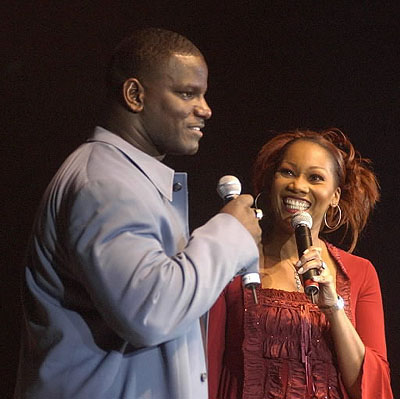
(This photo shows Fred Weary at the Super Bowl Gospel Celebration, when
Super Bowl XXXVIII was in Houston. Obviously a desperate criminal!)

Sunday, November 19, 2006


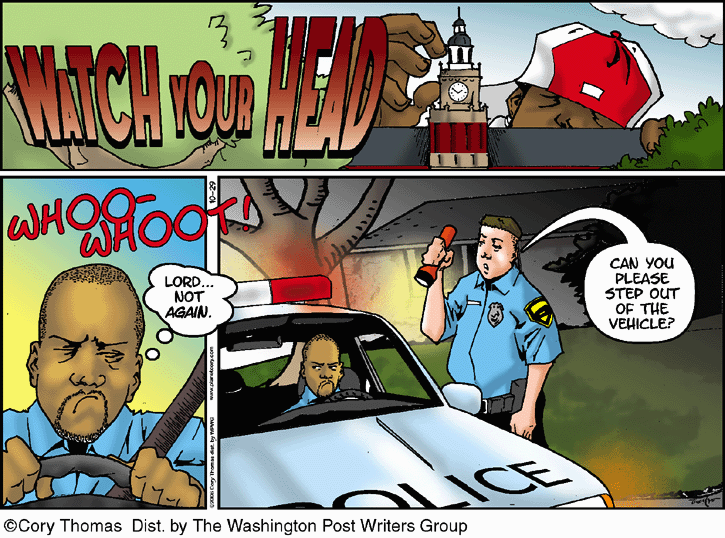
Last week, Houston Texans player Fred Weary was followed for six miles by Houston police, who finally pulled him over for an illegal lane change, and then told him he was also guilty of having a missing front license plate. As things progressed, Weary, an offensive lineman who does not have a reputation for misbehavior or a quick temper, ended up being handcuffed, Tasered and booked for resisting arrest.

Note that this occurred at one in the afternoon, not three in the morning. Here's how the Texans' fan blogger, herself an attorney, summed up the event.

And here's an excerpt from a story about the team's reaction:

"I've been with Fred since I got here, and I think so much of him that I'll give him the same kind of support I'd give a member of my family," quarterback David Carr said. "When I heard about it, I was kind of shocked. I thought something had to be wrong. Fred's a good guy. He never says anything bad about anybody."

Like Carr, guard Steve McKinney has been Weary's teammate for five seasons.

"Fred's a good guy," McKinney said. "He's a hard-working guy who keeps quiet. He's not an angry guy at all. He's mild-mannered. I've never known him to have a problem.

"When I heard that he was Tasered and taken into custody, I thought, 'No way. Not Fred.' There's just no way that could happen.

"I don't know the situation, but it's hard to imagine him losing control. In this locker room and on the field, Fred's a model player."


So the question in Houston: Was it an example of "driving while black" or something else?

But check out how the Chronicle asked the question:


What's your take on the Fred Weary taser incident?

The police overreacted.:
49%
Weary was wrong to approach the officer.:
12%
Not enough is known about the situation:
39%

Total Votes: 948


"Not enough is known about the situation"??? Since when did media polls care about THAT sort of thing?

Somebody needs to go have a talk with these people. If instant on-line polls begin to fashion questions that allow for thoughtful, intelligent responses, they're just not going to get the hits they need.

Meanwhile, it would be interesting to know if the 49% voting to suggest the police overreacted are football fans foremost, and how many are also black men who have been carefully taught caution by their parents, like this respondent to the above linked blog summary.

I am a 37 year old African-American that has lived in the Houston area much of my life and I applaud you for this article. The only edit that I'd suggest is to change the title to "Fred Weary's arrest raises concerns about HPD." When I was 16 years old my father taught me what to do when (not if) I was pulled over by HPD to avoid being shot before I turned the ignition for the first time. It's a shame that I'd need to teach the same lesson to my son.

A story to follow -- but, meanwhile, kudos to the Chron for giving readers a chance to vote intelligently rather than simply setting out the torches and pitchforks to see which way the mob would take them.

(The illustration is from a very good, fairly new strip, "Watch Your Head," by Cory Thomas.)

Friday, November 10, 2006


Happy Veteran's Day

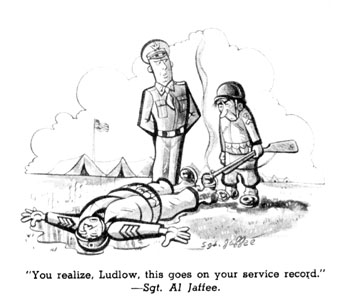
Here are two comic panels from Yank Magazine, which provided reading material to GIs throughout World War II.

The one of the top, of course, is by PFC Bil Keane, the one on the bottom by Sgt. Al Jaffee.

Just in case you thought Bill Mauldin was the only GI with a pen.

Monday, November 06, 2006


Howard Mosshead

So here's an interesting problem. Turtles are supposed to need these special lights that give them certain nutrients or good rays or whatever. They're called "basking lights" because the turtles climb up out of the water onto their rocks and bask in the warm light.

Except that Howard (who, by the way, is now about the size of a half-dollar) never comes out of the water, and if I were to put a few inches of mud in the bottom of his tank, I'm sure he'd be even happier. I still leave the light on, but I'm starting to think that's not such a good idea.

As anyone who has had tropical fish knows, keeping the lights on encourages algae to grow on the rocks and glass, though not on the fish. But when the critter in the tank is kind of like a rock, well, there's a reason they refer to old snappers as "mossbacks."

So when I clean Howard's tank once a week, I take out the rocks, scrub them and cover them in boiling water in hopes it will discourage the microbes. While this happens, Howard is in a shallow bowl. You have to understand, Howard does not like being handled and I have no particular urge to make him uncomfortable, so I take him out of the tank and put him in the bowl with some water, and then put him back as soon as his little habitat is ready for him.

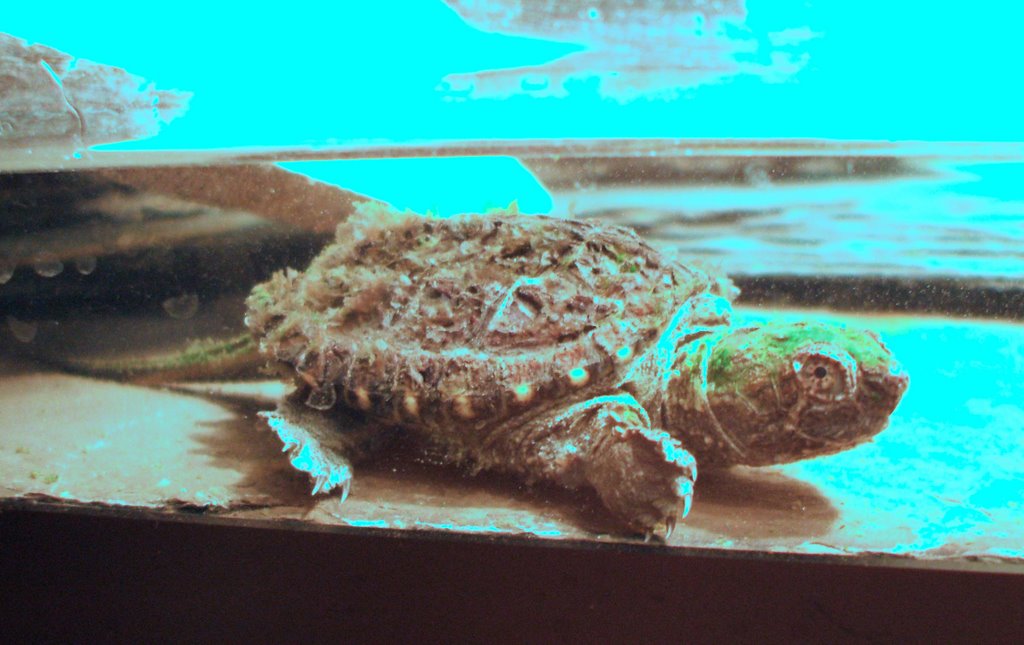
Only I do pick him up long enough to gently scrub his back with a soft toothbrush and try to take off the algae. If you look at this picture, you'll see a few bits of algae remaining, along with a lot of kind of fuzzy stuff which is the result of him growing ... he sloughs off bits of shell-skin on a fairly constant level.

What you'll also notice is a lot of green on his head. I don't think there's anything I can do about this, because even if his head would stand up to being scrubbed with a toothbrush, I'm sure his little turtle psyche would not recover from the insult to his dignity.

Since I will probably have to use the basking light to keep his water relatively warm through the winter when the rest of the house is somewhat cool, and he will definitely not be crawling out onto the rocks where he might actually dry off from time to time, it's entirely possible that, by spring, Howard will have a nice shock of bright green hair.

Wednesday, November 01, 2006


This week in Drawing Conclusions, Tom Toles and Jim Morin take a look at the looming elections and the potential for surprise results.

Meanwhile, Nellie Bly examines the new report from Britain's Exchequer about the economic cost of global warming.

http://www.nelliebly.org

Tuesday, October 31, 2006


In case you missed it

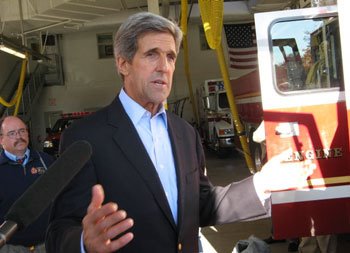
“If anyone thinks a veteran would criticize the more than 140,000 heroes serving in Iraq and not the president who got us stuck there, they're crazy. This is the classic G.O.P. playbook. I’m sick and tired of these despicable Republican attacks that always seem to come from those who never can be found to serve in war, but love to attack those who did.

"I’m not going to be lectured by a stuffed suit White House mouthpiece standing behind a podium, or doughy Rush Limbaugh, who no doubt today will take a break from belittling Michael J. Fox’s Parkinson’s disease to start lying about me just as they have lied about Iraq. It disgusts me that these Republican hacks, who have never worn the uniform of our country lie and distort so blatantly and carelessly about those who have.

"The people who owe our troops an apology are George W. Bush and Dick Cheney who misled America into war and have given us a Katrina foreign policy that has betrayed our ideals, killed and maimed our soldiers, and widened the terrorist threat instead of defeating it. These Republicans are afraid to debate veterans who live and breathe the concerns of our troops, not the empty slogans of an Administration that sent our brave troops to war without body armor.

"Bottom line, these Republicans want to debate straw men because they’re afraid to debate real men. And this time it won’t work because we’re going to stay in their face with the truth and deny them even a sliver of light for their distortions. No Democrat will be bullied by an administration that has a cut and run policy in Afghanistan and a stand still and lose strategy in Iraq.”

-- John Kerry

Saturday, October 28, 2006

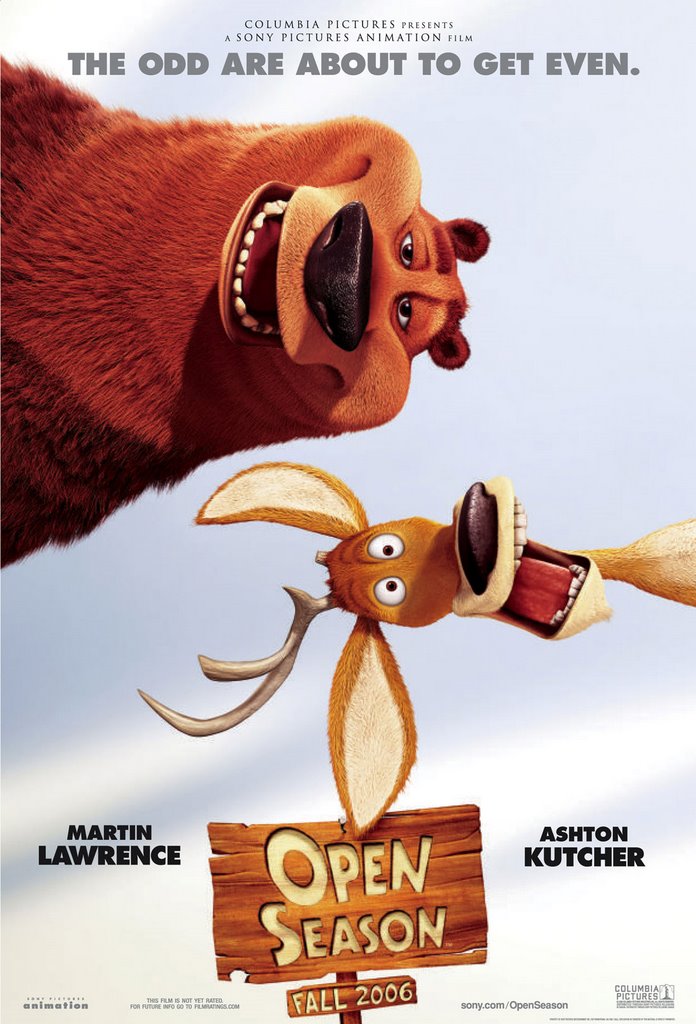
In lieu of visiting my eldest granddaughter on her 10th birthday, I direct your attention to this thoughtful Op-Ed piece from thetyee.ca on the state of children's movies, occasioned by the writer attending "Open Season" with her son.

"The exhaustion of the animated genre is clearly evident, but even more troubling, is the fundamental lack of respect for children's intelligence. If they were any good at organizing, perhaps modern kids might take to the streets, protesting this lack of suitable content. Because it truly feels like a desert out there. Kids want to go to the theatre to see movies, the same as anyone else, but there is so little you can actually bear to take them to."

Thursday, October 26, 2006


Science -- and copy editing -- march on

Secrets of the honey bee revealed in genome code
Wed Oct 25, 2006 1:07 PM ET

LONDON (Reuters) - Scientists have unraveled the genetic code of the honey bee, uncovering clues about its complex social behavior, heightened sense of smell and African origins.

It is the third insect to have its genome mapped and joins the fruit fly and mosquito in the exclusive club.

The honey bee, or Apis mellifera, evolved more slowly than the other insects but has more genes related to smell.

"In biology and biomedicine, honey bees are used to study many diverse areas, including allergic disease, development, gerontology, neuroscience, social behavior and venom toxicology," said Gene Robinson, director of the University of Illinois Bee Research Facility and one of the leaders of the project.

"The honey bee genome project is ushering in a bright era of bee research for the benefit of agriculture, biological research and human health," he added.

With its highly evolved social structure of tens of thousands of worker bees commanded by Queen Elizabeth, the honey bee genome could also improve the search for genes linked to social behavior.

But the consortium of scientists, who reported the findings in the journal Nature, said a comprehensive analysis of the honey bee and other species will be needed to understand its social life.

Queen Elizabeth has 10 times the lifespan of workers and lays up to 2,000 eggs a day. Despite having tiny brains, honey bees display honed cognitive abilities and learn to associate a flower's color, shape and scent with food, which increases its foraging ability.

(Okay, the illustration was mine. The story, however, belongs to Reuters.)

Tuesday, October 24, 2006

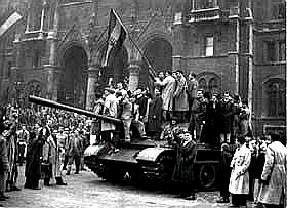
This week, Nellie Bly visits Budapest, where demonstrators found themselves competing for attention this week with memories of a true rebellion.

Meanwhile, in "Drawing Conclusions," Ben Sargent and Stuart Carlson take a look at the major parties and how they are handling election issues.

http://www.nelliebly.org

Comments, as always, welcome.

Sunday, October 22, 2006


Everything new is new again

I drove up to Vermont yesterday to meet my granddaughter, Johanna Michelle. (Her other grandfather is named John.) Of course, I took lots of pictures, but this one of her with her mother was clearly the winner.

There are many things I find fascinating about this young woman, but here's the part that struck me most yesterday: When the kids first announced that she was on her way, I was thrilled for them, but expected that most of my own joy and surprise would come from watching of them become parents. As for myself, well, it was to be my fourth grandchild, and I'm getting pretty good at that.

However, as the pregnancy developed, I found myself totally caught up in the "first time" aspects. Younger Son and Wife have a very different approach to things than Older Son and Wife, which -- aside from the addition of wives -- is not different today than 30 years ago when Younger Son came on the scene.

I think most parents with more than one kid have had this experience: During the pregnancy, you tell yourself that you really have to make an effort not to hold the second child up to the standards of the first, but to let that young sibling develop as an individual. And then, when it happens, you realize that all your stern resolutions were pointless -- only The Great Santini could treat two different siblings as if they were the same child. Our two boys share some strong common bonds forged within the family, but they could not be more different as individuals.

Similarly, as the pregnancy progressed, the notion that Johanna was "Number Four" utterly disappeared. By the time she arrived, and really for quite a while before that, I was just as excited as when her eldest cousin Elizabeth was born a decade ago.

And yesterday, I was just as dumfounded in her presence.

I expect you to be, also.

Tuesday, October 17, 2006


This week, "Drawing Conclusions" looks at Korea's nuclear test but does NOT include a cartoon showing Kim Il-Jong's hair as a mushroom cloud. It wasn't easy to avoid those, but Robert Ariail and Kevin Siers turned in some nice work.

Meanwhile, Nellie takes a look at the Canadian role in Afghanistan, where the Canadians appear to be very much in harm's way.

http://www.nelliebly.org

Comments welcome.

Saturday, October 14, 2006


The vast left-wing conspiracy

North Carolina Rep. Charles Taylor is demanding a retraction from a newspaper that published various assertions about him. If his rebuttal is accurate, he's got a pretty good point. But, the merits of his claim aside, this graf in Editor & Publisher's coverage caught my eye:

Bill Sabo, a political science professor at the University of North Carolina at Asheville, called Taylor's demand for a retraction a wise political move. Before Shuler's campaign and other Democrats can "pick this up and start hammering with it," Taylor is turning the table and responding as "a tough, aggressive, independent individual who is being picked on by the liberal media," Sabo said.

The liberal media again! Damn them!

And which liberal media outlet is Taylor threatening to sue? That com-symp rag, The Wall Street Journal.

Meanwhile, editorial cartoonist Jim Borgman clarifies his own record as a liberal, with a blog entry that puts the lie to the conservative claim that those currently going after Congressman Mark Foley were soft on Clinton. (Never mind the difference between hitting on a 16 year old and hitting on a 24 year old, of course.)

Tuesday, October 10, 2006


This week, Drawing Conclusions looks at the murder of a Russian reporter, and the suspicions that the Russian government was behind the death. Ann Telnaes and Jeff Danziger lend their talents.

Meanwhile, Nellie Bly visits Mongolia, where celebrations of the nation's 800th anniversary include an attempt to regulate commercial use of Genghis Khan's name and image.

http://www.nelliebly.org

Feedback, as always, is welcome.

Saturday, October 07, 2006


Here's why I moved back East

I've nearly been back in the Northeast longer than I was away; I was at college for four years and in Colorado for 16, and I moved back here in 1987. There are things I miss about Colorado, especially in the muggy days of an East Coast summer or when the dark, cold days of winter refuse to let go.

But this time of year, oh, my, am I glad to be back.

I went up to Plattsburgh and snatched a canoe away from my eldest child a few weeks ago, and this morning I put it into the Hudson River at the spot where the dogs get their drinks during our twice-daily walk. I paddled up stream (being no fool) and, once I was past the bridge over the Interstate, it was quiet and tranquil. After about half a mile, the sound of traffic was just a swishing in the background and I could almost pretend I wasn't in the city.

Mostly, I wanted a quick excursion to see what it would take to get the canoe up and down off the top of the van, how the dogs would react to sitting in the car and seeing me leave by river, and what muscle groups I would rediscover throughout the process.

The dogs do not get to come along. For one thing, they hate water and would be freaked out by the canoe, which is very small to begin with. Also, their combined weight is about 215 pounds and neither one of them is willing to help paddle. The combination of them not wanting to come and me not wanting them to come either, seemed to work out well -- they sat in the van and waited peacefully.

The canoe is small, so that, when I first got in, it wobbled quite a bit, but since I was always taught to kneel in a canoe rather than sit, it was comfortably stable once I was in position. And kneeling also takes a lot of the strain off your paddling muscles, so that went well, too. The only real problem is that my feet and knees aren't quite as flexible as they were 45 years ago when I was learning all this stuff -- I don't know how the voyageurs managed things once they started getting le rheumatiz but I suppose once you load your canoe with all those supplies, the issue of stability kind of takes care of itself one way or the other, no matter how you sit, kneel or stand in it.

I went upstream about a mile and a half and, as I went around a curve, started encountering a headwind, so decided I'd experimented enough. I turned around and sat on the floor of the canoe with the paddle across the thwarts and just let the slow current take me back to the boat launch, sticking the blade in now and then to keep me pointed downstream. Two guys went by in a bass boat, keeping their distance and not going too fast, and a fellow pulled out of his dock, headed for the boat launch to put his boat away for the winter. They were the only other people I saw on the river. I heard some kids playing on the shore at one point, and somebody's dog was barking, but that was balanced by a squirrel chattering away in the woods and a small formation of geese who went honking over, following the river south.

I live about five miles from this spot, and a mile from work. Granted, I'd rather live right on the river and in the middle of nowhere, but they don't publish newspapers in the middle of nowhere. All things consider, I have very little to complain about.

And this time of year, I rarely do.

Friday, October 06, 2006


Too drunk for the hammock

A nice spot by ronniecat. This bear looks awfully young -- I wonder if anyone ID'ed him? We could have a scandal of underage bears being served in Colorado.

Tuesday, October 03, 2006


This week, Drawing Conclusions looks at the aftermath of Rep. Mark Foley's resignation from Congress, through pens of Jeff Danziger and Bill Schorr.

Meanwhile, Nellie Bly offers students some thoughts about the recent rash of school shootings.

Comments are always welcome.

http://www.nelliebly.org

Saturday, September 30, 2006


What did the president say and how did he say it?

Darrin Bell's "Candorville" is one of the bright spots on the comics page -- smart, funny commentary that has a distinctly progressive point of view but never shrinks from self-criticism.

But he doesn't stop there, and he runs a meeting place called ToonTalk where cartoonists gather for both professional and political exchanges.

And he has a blog at candorville.com which recently linked to this very revealing 11 minute excerpt of the now-infamous Clinton interview on Faux News. Why infamous? Because they took a segment that ran just under a minute out of context and used it to concoct a smear. Here's a little more, and it's a great performance by Clinton.

Do you have 11 minutes to watch this? Well, what's 11 minutes compared to the past six years and the next two years? You've got 11 minutes.

Wednesday, September 27, 2006


This week in "Drawing Conclusions," we look at the compromise between the White House and GOP senators on questioning suspected terrorists, through the eyes and pens of Bill Schorr and Kevin Siers.

Meanwhile, Nellie Bly visits Thailand to report on a coup in which a Thai general uses an unusual but fascinating metaphor for what he and his co-conspirators have done.

Comments are always welcome.

Saturday, September 23, 2006


I think you lost them at "if" ...

(From a NYTimes article about NBC contemplating airing a concert in which Madonna mimicks the Crucifixion with herself the victim.)

Madonna also issued a statement on Thursday saying that the performance was “neither anti-Christian, sacrilegious or blasphemous.”

“Rather,” it went on to say, “it is my plea to the audience to encourage mankind to help one another and see the world as a unified whole. I believe in my heart that if Jesus were alive today, he would be doing the same thing.”

(picture: Madonna confers with Jesus at a popular watering hole.)

Wednesday, September 20, 2006


And so it's come to this ...

My friend Mike Powers is a musician, a magician and a mathematician. We go back nearly 40 years, and do so every once in awhile by assembling some old reprobates for music and fellowship. It didn't make me feel old when he retired from teaching (math) and started concentrating on his magic -- he started teaching as soon as he graduated, so it's okay that he piled up enough years to retire.

But in an email, he writes: BTW – I’m playing in a rock band. It’s a blast. Our website is www.blackjack66.com. As you might surmise, our name is Blackjack 66. It’s difficult getting gigs these days. These blasted DJ’s don’t cost much and people seem to prefer just listening to their favorite tunes. We go over well at VFWs and places with an older crowd that likes to dance. It’s really fun to rock the joint and get everyone dancing.

Consarn it, it's a helluva thing when old rock-and-rollers have to go down to the danged VFW post and play for the old folks to get people who will rock out with them. We used to be the people our parents warned us about. Now we're just our parents.

On the other hand, I've got music from the band's website playing as I write this, and it ain't too bad. Y'know ... for a bunch of old guys ... (actually, it looks suspiciously like the band only includes ONE old guy ... )

Tuesday, September 19, 2006


This week in Drawing Conclusions, two cartoonists -- Jim Morin and Jeff Danziger -- take different artistic tacks to the same purpose: Commenting on the way the White House has responded to GOP criticism of its attempts to re-focus Article 3 of the Geneva Convention.

Meanwhile, Nellie Bly goes to Budapest, where what may have been an out-of-context quote from a taped party meeting has sent rioters into the streets.

http://www.nelliebly.org

Feedback is always welcome!

Sunday, September 17, 2006


Howard (if that's his name) Eats

Well, about a week after taking up residence here, and I suspect a week after taking up residence anywhere outside an egg, the turtle has eaten. This isn't unusual -- they subsist for a week or two on yolk. But yesterday he snapped at some turtle food and since then has eaten a few pieces, which, for someone his size, is probably enough. I'm always surprised at how rarely reptiles eat, but I suppose if you aren't burning a lot of energy regulating your blood temperature, that makes sense.

I'd try to post a movie of him eating but one of the things I learned in reading about these animals is that they need a place to hide. So I gave him a piece of broken earthenware and now I have the thrill of a pot of water on my kitchen counter with occasionally a foot or the tip of a tail in sight or, on good days, a glimpse of his head. This is not very much like owning a dog.

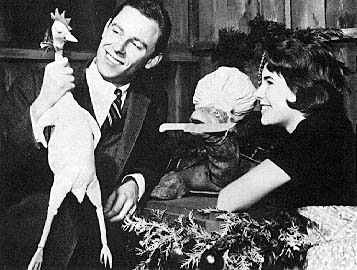
Ronnie asks if he has a name and he doesn't appear to, but if he did, it would be Howard. That's Howard the Turtle, between Al Hamel and Michelle Finney. They starred on a fondly remembered CBC kids show called Razzle Dazzle. I've mentioned it to Canadians in the past with no particular response, and when I looked it up, I found out why. It was only on the air for about four years and you'd have to be at least 45 to remember it, and 10 years older to have been in its target age.

However, in looking it up, I realized why my friend Chris Morphy and I were so in love with Michelle. All these years, I've assumed she was a young-looking young woman. No, she was our age -- she was 11 the first year the show was on, 12 the second year, and replaced the third year, at which point we quit watching it anyway because we were high school freshmen and had other things we needed to be doing.

The show was a mix of things, including Howard, who was a sock puppet sticking out of a turtle body on a pedestal. The puppeteer who did Howard also did the puppets for The Friendly Giant and Mr. Dressup, so you have to think Burr Tilstrom rather than Jim Henson.

They showed serials, mostly "The Terrible Ten" which was Australian and since we didn't get to see the show every day, a little confusing -- mostly kids with funny accents running around. And they read viewer mail, and had a segment where they would choose an invention from a viewer and make it. Chris had one that got on the air, a kind of sombrero with a poncho rolled up on the brim so that, if it rained, you could just pull it down. They made it, Michelle modelled it and Chris was supposed to get the prototype in the mail, though I don't know if he ever did. I know it didn't show up right away.

Howard would dress up, as in this picture, or he would come up with some wonderful idea that wouldn't work, or a combination of the two. The only one I remember specifically was the time he bought an island that was going to make him wealthy because it produced so many potatoes. It was called "Potato-Eating Island" but on the map he was given, they just used the initials.

This would have been one of the more sophisticated jokes on Razzle Dazzle. Michelle would groan and say, "That's a real groaner!" but she loved Howard and I think that's why we loved Michelle. She was just what every seventh grade boy wants: A really cute girl who likes really stupid jokes. (Viewers also sent in groaners. The show was very well targeted to our age group.)

I couldn't find any information on whatever happened to Michelle Finney. A few years after Razzle Dazzle went off the air, she had a role in a CBC drama in which she played a young pioneer, and she was competent without blowing everyone out of the water. And I found evidence of a reunion show with Al and Howard in 1978, but that was it.

Anyway, this turtle doesn't seem to have a name, but, if he had a name, it would probably be Howard.

Tuesday, September 12, 2006


This week, Drawing Conclusions explores the use of fiction in documenting history, specifically the history of 9/11, through the eyes and pens of Mike Peters and Glenn McCoy.

Meanwhile, Nellie Bly notes Constitution Day with a report on Thomas Jefferson's insistence that an educated, informed public was the best defense against bad government.

http://www.nelliebly.org

Comments, as always, welcome.

Sunday, September 10, 2006


Crikey! This snapping turtle has lightning reaction time and powerful, crushing jaws!

Well, maybe some day. Meanwhile, I'm going to let him hang out in a tank on the kitchen counter through the winter and see how he does. I figure that, by next summer, he'll be about 2/3 the size of a hockey puck and will have gotten to the point where I'd have to invest in real equipment and start to worry about those jaws.

Fortunately, since these guys genuinely operate on a reptilian brain and nothing else, you can't really do much to interfere with their survival instincts. If I put him in a pond where the things that move are edible, he'll be fine. And snapping turtles also eat things that haven't moved in several days. They're not finicky. I also have a pretty good sense of the odds of a hatchling making it through the first week, never mind the first year of life. I don't think I'm going to be significantly messing with his fate.

A number of years ago -- that number being 21 -- I had a girlfriend with a pet snapping turtle named Roland who was about the size of your hand, as long as you were careful and kept him away from your hand. Otherwise, he would be somewhat larger than your hand.

Roland lived in a tank by her back kitchen door, in about three inches of water and gravel. She'd buy feeder goldfish and put them in his water, where they would swim around what appeared to be a large rock. Then there would be a splash but you wouldn't actually see his head move. What you would see was goldfish scales floating in the water and a bit of fishtail hanging out of Roland's mouth.

When it was time to clean his tank, I would hold Roland up between finger and thumb at the very back of his shell while she rinsed out the tank. He would occasionally crane his neck around to see what was holding him and I would marvel at the length and flexibility of that neck, just as I would marvel at his reaction speed when he was fed. Not a comforting combination, and considering that Roland never gave the slightest inclination that he even knew who we were, much less any sense of being nice to the source of his food, I really couldn't see the point. I'm curious to see how this little fellow grows and behaves, but I doubt I'll feel bad about releasing him when the time comes.

Incidentally, in researching the proper care of snapper hatchlings, I found a very detailed web site by someone who really understands reptiles, with specifications about the type of filter and the various light bulbs and calcium supplements and so forth. It was starting to look like it would cost more to keep a turtle than a dog.

Then I found another web site by a woman who apparently keeps turtles in tanks throughout her house. She was a lot more laid back about the process. Roland lived in about the opposite of all the conditions the expert laid out, but it sounded quite a bit like the conditions she discussed.

We're going with the second option.

Friday, September 08, 2006


Just as funny as it was four years ago. However, I have an uncomfortable feeling that, more and more often these days, this conversation takes place in editorial board meetings.

(Foxtrot, by Bill Amends)

Tuesday, September 05, 2006


This week, Nellie Bly marks five years of reporting with a few anecdotes and a link to a "Best of Nellie Bly" page, featuring a half dozen of her most memorable stories.

Meanwhile, in "Drawing Conclusions," Jim Morin and Ben Sargent take Labor Day as an opportunity to examine the current state of the working class.

http://www.nelliebly.org